Guide
Screenshot PDF or Print to PDF: which should you use?
Use a screenshot PDF when the visible screen arrangement is the evidence. Use browser Print to PDF when you want a document layout and the page prints cleanly. They preserve different things, so inspect the output rather than treating them as interchangeable.
Decide what must survive
Compare the same page both ways
Use an input you are allowed to save. The downloadable example fixture contains no customer information.
- Load the content
Scroll through the page and expand the invoice panel. Wait for delayed images to appear.
- Save a screenshot PDF
Capture the full page, save the image, and use the converter in Split tall images mode with A4 paper.
- Print the original page
Return to the webpage, choose Print, then Save as PDF. Review the paper size, scale and background graphics setting in the print preview.
- Inspect both files
Search for a visible word, try selecting it, click a link, and compare the first and final rows. Record omissions before choosing the file to send.
Why browser printing can look different
Websites can define a separate print layout. Menus may disappear, backgrounds may be omitted, columns may stack and long tables may break differently. That can make a document easier to read while making it unsuitable as evidence of the screen’s exact arrangement.
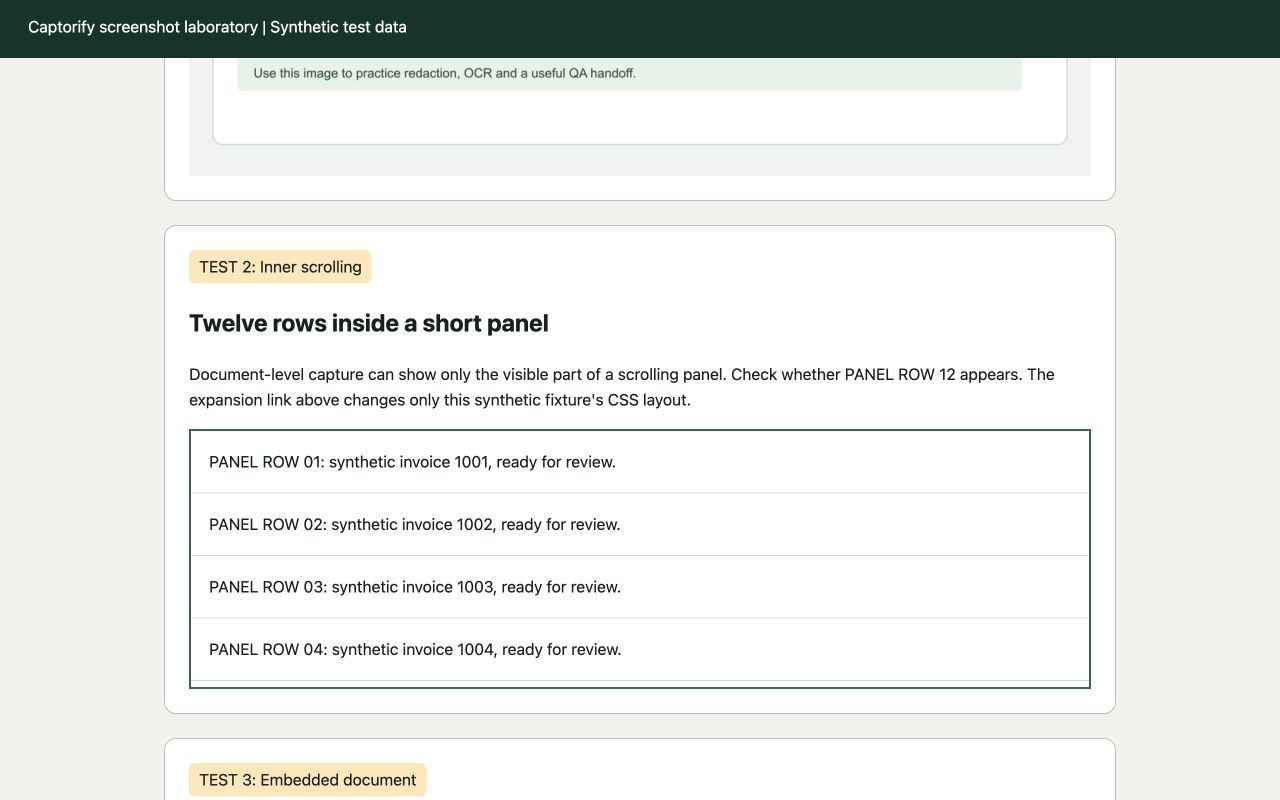
Changing print scale cannot restore content that was never loaded. If a panel is missing, use its own export or expand it before printing.
Keep tall screenshots readable
Fit-to-page scales the entire image onto one sheet. A very tall screenshot becomes narrow and its text becomes tiny. Splitting at the page width preserves a readable scale across several pages.
Page boundaries can cut through a line because a screenshot is pixels, not paragraphs. Inspect each boundary. Crop into logical sections before conversion if a clean paragraph break matters.
Verify privacy in the final artifact
After redaction, convert the newly exported image. Do not return to Print to PDF on the unredacted source page. Open the actual PDF you are sending and check names, identifiers, page edges and all appended images.
Neither format proves when a webpage existed or that its contents were authentic. Record the source and capture time separately when they are useful context.
What the two actual files show
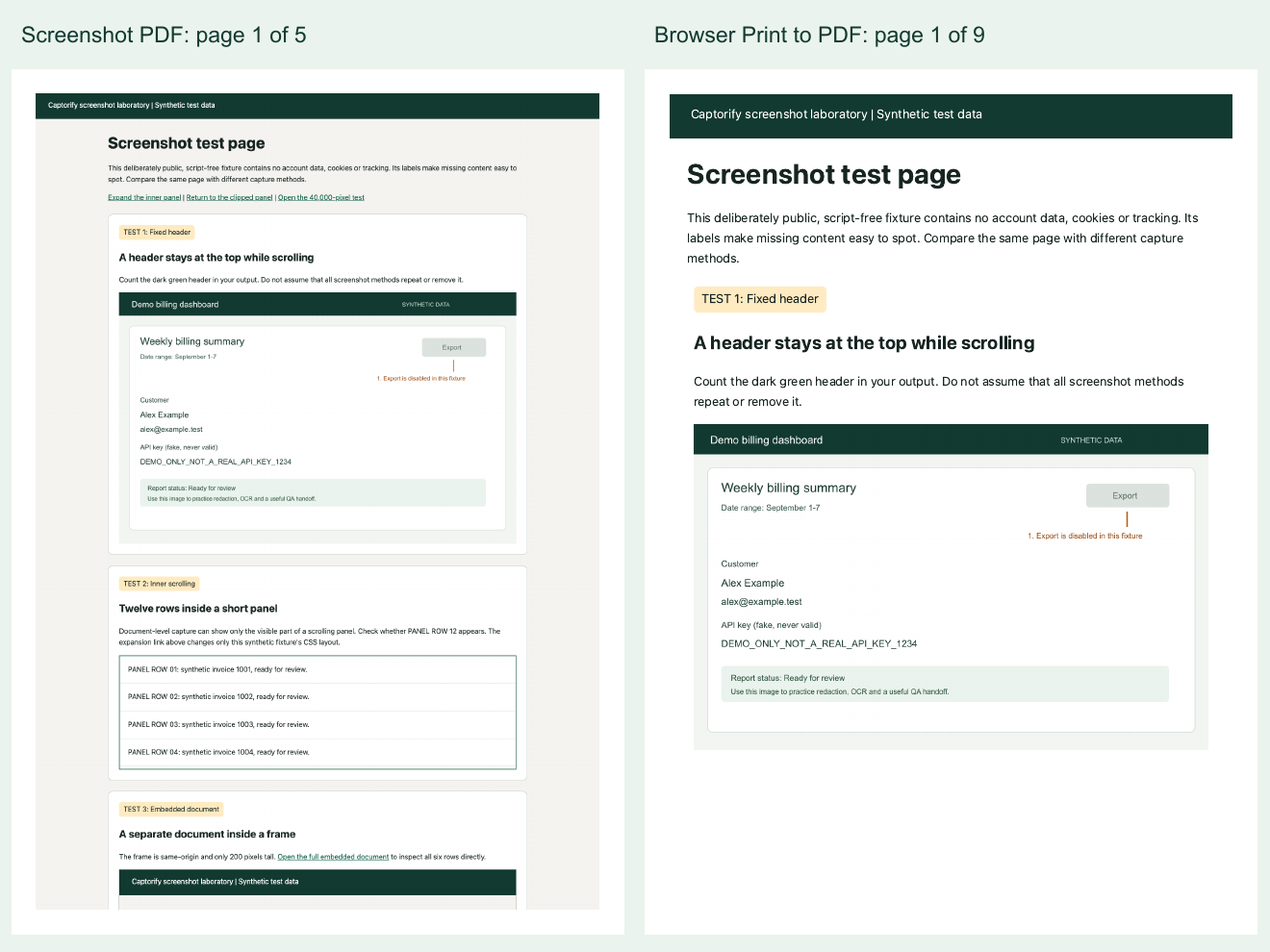
We captured and printed the same example fixture after loading its delayed image, leaving the inner panel in its default clipped state. The screenshot PDF has five pages. Browser printing has nine and lays out the opening content at a larger scale.
The page includes a deliberately long gap to test lazy loading, so the totals reflect this fixture. The useful result is that printing and image conversion produce different layouts. Neither result establishes that every panel or embedded row is present.